Muhammad IrfanJuly 18, 2026
Technology has become a key driver of business growth, but simply building software is no longer enough to stay competitive. Today's customers expect digital products that are fast, intuitive, secure, and continuously improving. Businesses are also under constant pressure to innovate, adapt to changing market demands, and embrace emerging technologies like Artificial Intelligence (AI), cloud computing, and automation.
This shift has changed the way organizations approach software development. Instead of treating software as a one-time project, successful companies now view it as a product that evolves over time. This is where Digital Product Engineering comes in.
Digital Product Engineering goes beyond writing code. It combines business strategy, product thinking, user experience, modern engineering practices, and continuous innovation to create digital products that deliver long-term value.
In this guide, we'll explore what Digital Product Engineering is, how it differs from traditional software development, why businesses are investing in it, and how it helps organizations build products that are ready for the future.
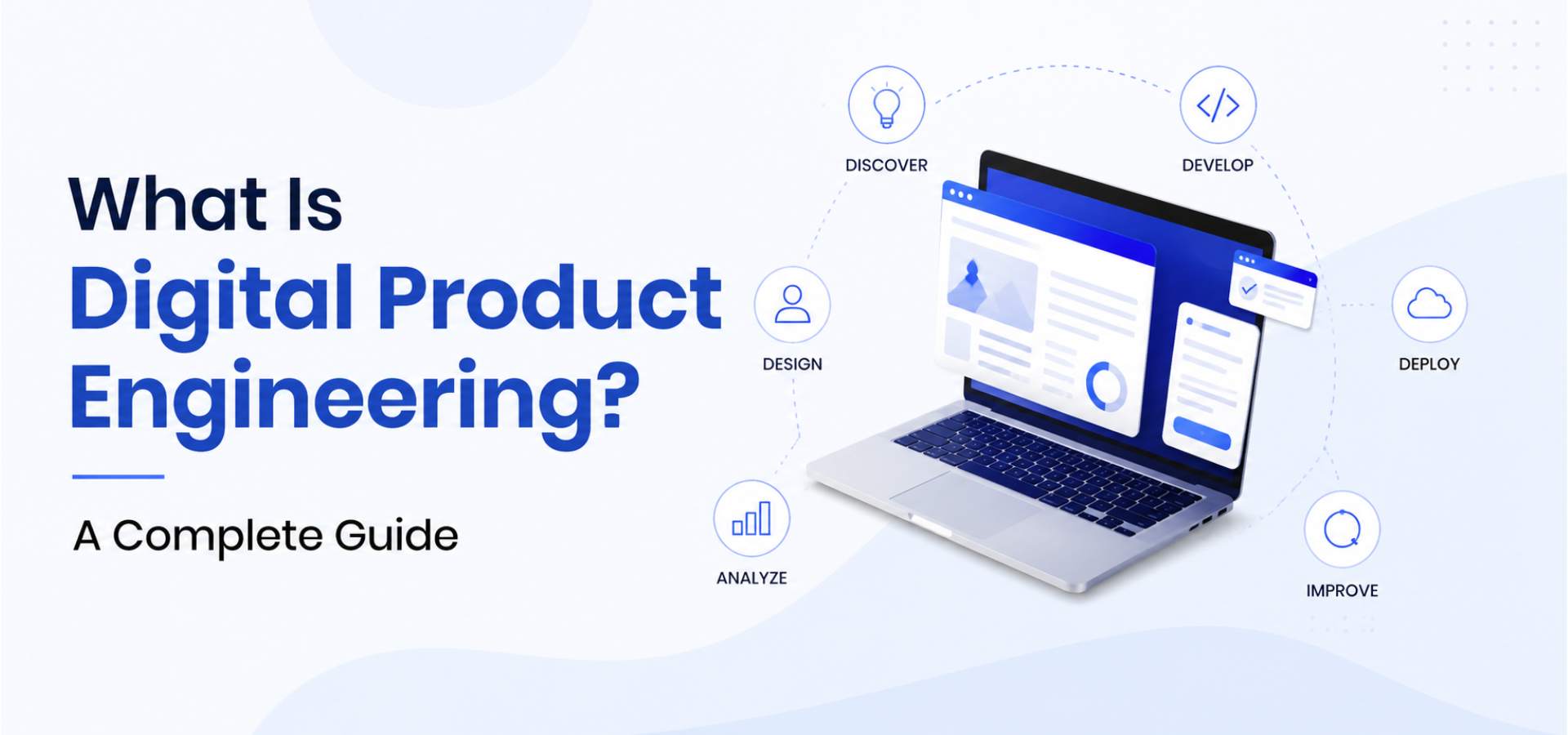
Digital Product Engineering is the end-to-end process of designing, developing, launching, and continuously improving digital products throughout their lifecycle.
Unlike traditional software development, which often focuses on delivering a predefined set of requirements, Digital Product Engineering focuses on building products that can adapt to changing customer needs, business goals, and technological advancements.
A digital product is never truly finished. Once it's launched, product teams continue monitoring user behavior, collecting feedback, introducing new features, improving performance, and integrating emerging technologies to ensure the product remains relevant and competitive.
Digital Product Engineering brings together multiple disciplines, including:
Rather than asking, "How do we build this application?", Digital Product Engineering asks a broader question:
"How do we build a digital product that continues creating value for customers and the business?"
This shift in mindset is what makes Product Engineering different from traditional software development.
The expectations placed on digital products have changed dramatically over the last decade.
Customers no longer compare your application only with your direct competitors. They compare it with every exceptional digital experience they use—from personalized recommendations on Netflix to one-click shopping on Amazon and seamless collaboration in Slack.
As a result, businesses need products that can evolve continuously instead of remaining static after launch.
Digital Product Engineering helps organizations:
Instead of treating product launch as the end of development, Product Engineering considers it the beginning of continuous improvement.
Although both approaches involve building software, their objectives are fundamentally different.
Traditional software development focuses on delivering a project within a defined scope, budget, and timeline. Once the agreed features are delivered, the project is considered complete.
Digital Product Engineering, on the other hand, focuses on building products that continue evolving long after their initial release.
|
Traditional Software Development |
Digital Product Engineering |
|
Project-focused |
Product-focused |
|
Fixed requirements |
Continuous improvement |
|
Success measured by delivery |
Success measured by business outcomes |
|
Product launch ends the project |
Product launch starts the next iteration |
|
Focus on software development |
Focus on long-term product success |
This product-centric approach enables businesses to respond quickly to customer feedback, market changes, and new technologies without rebuilding their products from scratch.
Successful digital products are built through collaboration between multiple teams rather than software development alone.
Every successful product begins by understanding the business problem before writing a single line of code. Product Discovery validates ideas, identifies customer pain points, and defines the product vision, helping organizations reduce risk and build solutions that solve real problems.
User experience plays a major role in product success. Digital Product Engineering focuses on designing intuitive, accessible, and engaging interfaces that improve customer satisfaction and encourage long-term adoption.
Building scalable, secure, and high-performing applications is essential for long-term success. Modern engineering practices ensure products can support future growth without requiring major redevelopment.
Cloud-native technologies and DevOps practices enable businesses to deploy updates quickly, automate workflows, improve system reliability, and accelerate innovation through Continuous Integration and Continuous Deployment (CI/CD).
Artificial Intelligence is becoming a core part of modern digital products. From intelligent recommendations and predictive analytics to AI assistants and workflow automation, Product Engineering helps businesses integrate AI where it creates measurable value.
Unlike traditional development, Product Engineering doesn't stop after launch. Teams continuously analyze product performance, gather customer feedback, monitor user behavior, and release improvements that keep products relevant in an evolving market.
Businesses across industries are adopting Digital Product Engineering because it delivers both technical and business advantages.
Faster Time-to-Market: Agile development, automation, and DevOps practices help organizations release products faster while maintaining quality.
Better Customer Experience: Continuous improvements based on customer feedback create products that are easier to use and more valuable over time.
Scalable Products: Modern architectures allow businesses to handle increasing users, data, and transactions without compromising performance.
AI-Ready Solutions: Organizations can integrate AI-powered capabilities that improve productivity, personalization, and decision-making.
Reduced Technical Debt: Strong engineering practices minimize future maintenance costs while making products easier to enhance.
Long-Term Business Value: Rather than becoming outdated after launch, digital products continue evolving to support changing business goals.
Digital Product Engineering is no longer limited to technology companies. Organizations across various industries are using it to build innovative digital experiences.
Healthcare providers develop secure patient portals and telemedicine platforms. Financial institutions create intelligent banking applications and fraud detection systems. Retail businesses improve customer engagement through personalized shopping experiences. Manufacturing companies leverage IoT, automation, and predictive maintenance to optimize operations.
Similarly, organizations in education, logistics, HR technology, real estate, and SaaS are investing in Digital Product Engineering to modernize operations and deliver better customer experiences.
Artificial Intelligence is reshaping the way digital products are designed and developed.
Modern users expect products to understand their preferences, automate repetitive tasks, provide personalized recommendations, and deliver intelligent insights. Instead of adding AI as an afterthought, Digital Product Engineering integrates AI throughout the product lifecycle.
Businesses are increasingly using AI for:
By combining AI with Product Engineering, organizations can build digital products that continuously learn, adapt, and create better experiences for users.
At Technaureus, we help organizations transform ideas into scalable, intelligent, and future-ready digital products.
Our Digital Product Engineering services cover the entire product lifecycle—from Product Discovery and Business Analysis to UX/UI Design, Application Development, Cloud Engineering, DevOps, AI Integration, Product Modernization, and Continuous Product Enhancement.
Whether you're building a new SaaS platform, modernizing an enterprise application, or integrating AI into an existing product, our team focuses on delivering solutions that create measurable business value while remaining adaptable to future technological changes.
The way businesses build software is changing. Customers expect products that continuously improve, adapt quickly, and deliver exceptional digital experiences. Meeting these expectations requires more than software development alone.
Digital Product Engineering combines strategy, design, engineering, AI, cloud technologies, and continuous innovation into a unified approach that helps businesses create products built for long-term success.
Organizations that adopt a Product Engineering mindset aren't simply delivering software—they're building digital products that continue creating value long after launch.
If your business is planning its next digital product or looking to modernize an existing one, investing in Digital Product Engineering can provide the flexibility, scalability, and innovation needed to stay ahead in today's competitive digital landscape.





0