Sanjay AjayMarch 23, 2026
Building scalable and maintainable web applications requires more than writing good code. A well-organized project structure is essential for managing complexity, improving collaboration, and ensuring long-term maintainability. As Django continues to evolve, developers are adopting modern patterns and architectural practices that make projects cleaner and easier to scale.
In 2026, following the right Django project structure best practices is crucial for teams building large applications, APIs, SaaS platforms, and enterprise systems. A properly structured project not only improves development speed but also enhances maintainability, performance, and django security.
In this guide, we will explore the best Django project structure practices for modern applications and how developers can organize their code effectively.
Many beginners start Django projects with the default structure and continue adding files without proper organization. While this may work for small projects, it quickly becomes difficult to manage as the application grows.
A well-structured Django project helps developers:
● Maintain clean and readable code
● Improve collaboration between team members
● Easily scale applications
● Reduce bugs and technical debt
● Improve maintainability and django security
Large applications like SaaS platforms, ERP systems, and enterprise tools benefit greatly from a structured and modular Django architecture.
When you create a new Django project using django-admin startproject, Django generates a basic folder structure.
Example structure:
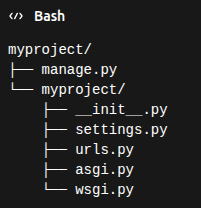
This structure works well for simple projects, but as the application grows, developers typically create multiple apps and separate different parts of the codebase.
For large projects, it is recommended to organize the code into clearly defined modules.
A modern Django project structure often looks like this:
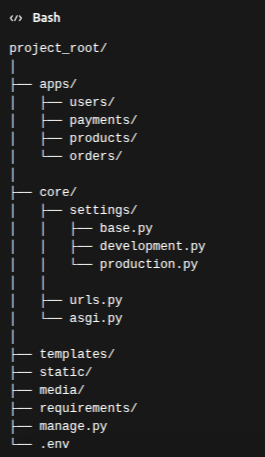
This structure separates concerns and improves maintainability.
● Apps are grouped inside an apps directory
● Settings are separated by environment
● Static and template files are organized
● Environment variables are managed properly
● Security configurations improve overall django security
One of the most important best practices in Django is separating settings for development, staging, and production environments.
Instead of keeping everything in one settings.py, developers create multiple configuration files.
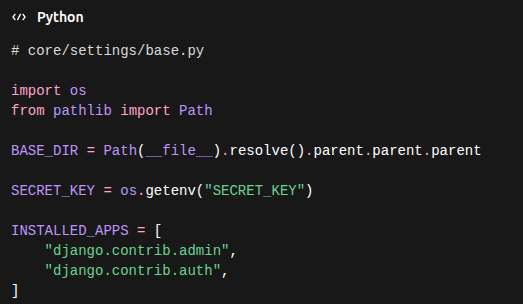
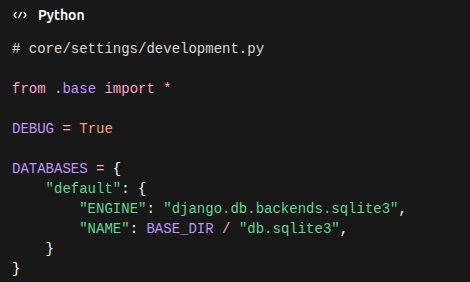
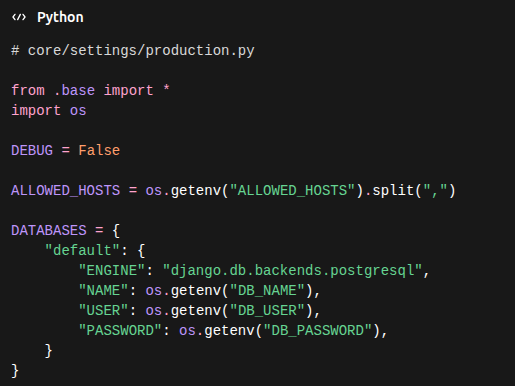
Separating settings helps:
● Prevent accidental exposure of secrets
● Manage different database configurations
● Improve django security by isolating production settings
Sensitive information such as API keys, database credentials, and secret keys should always be stored in environment variables rather than inside the codebase.
A Django project can contain multiple apps, each responsible for a specific functionality.
For example:
● users – authentication and user management
● products – product catalog
● orders – order processing
● payments – payment handling
Keeping apps modular makes the project easier to maintain and scale.
● Each app should handle one responsibility
● Avoid creating very large apps with too many features
● Keep reusable logic inside dedicated modules
This modular approach also improves testing and overall code quality.
Many Django projects include a core app that contains shared utilities used across multiple apps.
The core app may include:
● Custom middleware
● Utility functions
● Common mixins
● Base models
● Shared services
This prevents duplication of code and keeps the application more organized.
Static files and templates should be organized properly to avoid confusion in large projects.
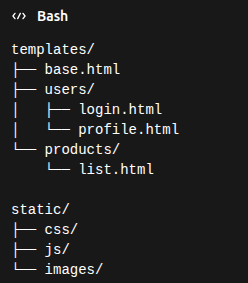
Keeping templates and static assets structured improves maintainability and performance.
Managing environment variables correctly is essential for protecting sensitive information.
Instead of storing secrets inside the project, use environment variables for:
● Secret keys
● Database credentials
● API tokens
● Email configuration
Example .env File
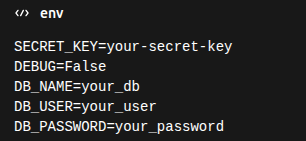
Using tools like .env files helps prevent sensitive information from being exposed in the codebase.
This is a critical step in maintaining strong django security for production applications.
Large Django projects often follow a service-oriented structure where business logic is separated from views.
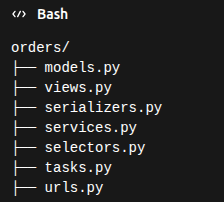
● services.py handles business logic
● selectors.py handles complex database queries
● tasks.py handles background jobs
This pattern improves readability, testing, and scalability.
A good project structure also contributes to better django security.
Important practices include:
● Keeping secrets outside the codebase
● Using separate settings for production
● Enabling security middleware
● Using secure cookies and HTTPS
● Regularly updating Django dependencies
Following these practices ensures your Django application remains secure and reliable.
A well-organized Django project structure is essential for building scalable, maintainable, and secure web applications. As projects grow in complexity, adopting modern architectural practices helps developers manage code more efficiently.
By separating apps, organizing settings, managing environment variables, and structuring business logic properly, developers can build robust systems that are easier to maintain and scale.
At the same time, these practices also improve django security, ensuring that sensitive data and application logic remain protected.
Whether you are building a startup platform, SaaS product, or enterprise system, following these Django project structure best practices in 2026 will help you build cleaner, safer, and more scalable applications.






0